In short
- You can ship domestic parcels in Germany without renting anything there: a verified individual holds a batch of your stock at home and posts each order as a German domestic parcel.
- Cross-border from the UK means customs on every parcel — VAT, a carrier handling fee and, since July 2026, duty per product type. From the Netherlands or Belgium there is no customs, but there is a cross-border rate and an extra day.
- Domestic from German stock costs the German domestic rate plus a flat fulfilment cost of about €3.10 per small parcel, and one bulk shipment into the stock.
- German customers expect home delivery, usually DHL, and know the Packstation. A pick-up point as the default is a French habit, not a German one.
- Holding stock in Germany makes your sales from that stock German domestic supplies. A German VAT registration is usually needed, and OSS does not replace it.
- Whatever route you choose, selling packaged goods to German consumers requires registration under the Verpackungsgesetz (LUCID). Marketplaces check it; customs does not.
Germany is the largest e-commerce market in the EU and the first one most small shops try to add. It is also where the cost of being foreign shows up fastest: a customer in Munich compares your delivery to Amazon.de and Zalando, both of which ship from inside Germany.
The usual answer is a German 3PL, and the usual outcome is a quote with a minimum you do not meet. This article is about the other answer — stock with a person in Germany rather than a warehouse — and about what it costs, what it changes, and what it does not solve.
Route A: every parcel crosses the border
You pack in your own country and buy a label to Germany. From the Netherlands, Belgium or France that is a cross-border EU parcel: no customs, a higher rate than domestic, usually a day longer. From the UK it is an import.
An import since July 2026 means three things per parcel: German VAT (collected via IOSS or at the door), a customs handling fee from the carrier, and customs duty of €3 per product type in the parcel. A two-item order is €6 of duty before the goods have been looked at. The full sum is in the €3 EU customs duty explained.
Route A is right at low volume. One stock, one place, one set of books. Its cost is that every one of those charges sits on every parcel, forever, and that your delivery time is what a German customer compares against a German shop.
Route B: one batch in Germany, domestic parcels after
You send one shipment — fifty units of your best seller, say — to a verified sender in Germany. They hold it at home, pack each order, buy a German domestic label and drop the parcel at a DHL shop or Packstation. The parcel starts in Germany, so it is a German parcel: domestic rate, domestic transit, no customs step.
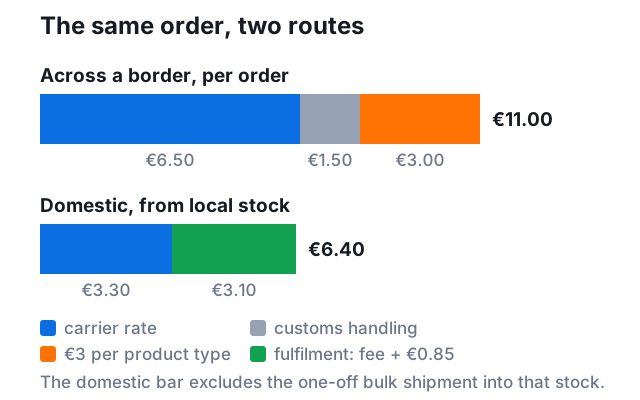
What you pay is the sender’s fee plus a platform fee — about €3.10 for a small parcel — and the domestic label. Storage, set-up, minimum: none, because there is no building. The model is defined in what is peer-to-peer fulfilment; the per-country sum is in how to ship domestically in Europe without a warehouse.
Route B exists only where there is a domestic service at a rate a shop will pay. Germany is one of them. The full list is read from the live rate card and is, today:
- Austria
- Belgium
- France
- Germany
- Italy
- Netherlands
- Spain
The two routes side by side
| Route A from the UK | Route A from NL / BE / FR | Route B: stock in Germany | |
|---|---|---|---|
| Label | International | Cross-border EU | German domestic |
| Customs per parcel | VAT, handling fee, €3 duty per product type | None | None |
| Fulfilment per order | Your own time | Your own time | ± €3.10 small parcel |
| One-off | None | None | One bulk shipment in; from the UK, one customs event |
| Transit | Longest; customs can add days | A day longer than domestic | Domestic |
| Customer sees | A foreign parcel, possibly a duty demand at the door | A foreign parcel | DHL, as from a German shop |
| Returns | Back across a border — rarely worth it | Cross-border | Back to the sender, into stock |
| VAT | IOSS or at the door | OSS | German registration usually needed |
| Fits | A handful of German orders | Tens of German orders | Tens to a few hundred German orders of a few products |
What German customers expect
Home delivery, and specifically DHL. Germany is the market where a pick-up point as the default option is most likely to be read as second-rate. The Packstation is the exception: a DHL parcel locker, widely used, chosen by the customer at checkout, and the one alternative to the door that a German customer actively likes.
So the default for Germany is home delivery, with Packstation as the customer’s choice where the carrier offers it. Which of those your sender can offer depends on the carriers they have ticked; check the profile before you send stock. The general trade-off between point, locker and door is in pickup point vs home delivery in Europe.
Two smaller expectations: an invoice in the parcel or by e-mail, in German, and a clear returns address in Germany. The second is where route B quietly helps — the return goes to your sender, not across a border.
Two laws that apply whichever route you take
VAT once stock sits in Germany
Moving your own goods to Germany is a transfer of own goods, and selling from that stock is a German domestic supply. That generally requires a German VAT number and German returns, and the OSS scheme does not cover it. It is administration, not a barrier — but do it before the first batch, not after a letter from the Finanzamt. The detail is in VAT when you store stock in another EU country.
The Verpackungsgesetz
Packaging registration is not optional
Anyone who puts packaged goods in the hands of German consumers must register in the LUCID packaging register and license their packaging with a dual system — including foreign shops, including small ones, whichever route the parcel takes. Marketplaces check the registration; customs does not. The fines are real. Budget an afternoon and a modest annual fee.
How to test it with one box
Pick the one product Germans already buy from you
Your best seller by German orders. One product means one number to compare and a mistake that costs one batch.
Register: VAT and LUCID
Talk to your accountant about the German VAT position before the batch moves. Register in LUCID regardless — you should already have.
Find a sender in Germany
On /en/senders: the right parcel sizes, a carrier your customers know, the fast-shipping badge, and space for your batch.
Send one batch — about a month of German orders
From the UK that is one customs event on a commercial import, instead of one per parcel. Record the batch in your account.
Set home delivery as the default for Germany
Per product, per country. Connect your Shopify store if you have one so paid German orders route themselves.
After a month, compare four numbers
Cost per order including customs and your time, transit time, support tickets, return rate. Then decide on the second product — not the whole catalogue.
If Germany is one of several countries you are weighing, the prior question — which country to hold stock in first — is worked through in where to hold stock in Europe. British shops should start with how to ship to EU customers from the UK, which covers the customs side end to end.
Frequently asked questions
Can I ship domestic parcels in Germany without a German warehouse?
Yes. A verified individual in Germany holds a batch of your stock at home and posts each order as a German domestic parcel. There is no building, so no storage fee and no minimum volume.
What does a parcel from the UK to Germany cost in customs since July 2026?
German VAT, a customs handling fee from the carrier, and customs duty of €3 per product type in the parcel. A bulk shipment into German stock is one customs event instead; the parcels after it are domestic.
Do German customers accept pick-up points?
Less than French or Belgian customers. Home delivery, usually DHL, is the expectation; the DHL Packstation is the one alternative German customers actively choose. Make home delivery your default for Germany.
Do I need a German VAT number if I hold stock there?
Usually yes. Sales from German stock are German domestic supplies, and OSS does not cover them. Check with your accountant before the first batch.
What is the Verpackungsgesetz and does it apply to me?
Germany’s packaging law. Anyone selling packaged goods to German consumers — including foreign and small shops — must register in the LUCID register and license their packaging with a dual system. It applies whichever route your parcels take.
How much stock should I send to Germany first?
About a month of German orders of one product. Tens to a few hundred units. Enough to measure, small enough to write off if it does not work.
Sources
A German customer does not compare you to other foreign shops. They compare you to Amazon.de. The only way to be in that comparison is for the parcel to start in Germany.
See what a domestic parcel costs in Germany today
Countries and rates